Cold vs hot tire pressure: what mechanics should set and refuse
Cold placard PSI vs hot bay readings: how much pressure rises after driving, why shops must not bleed hot tires, and a practical check SOP.
Last updated: November 5, 2026
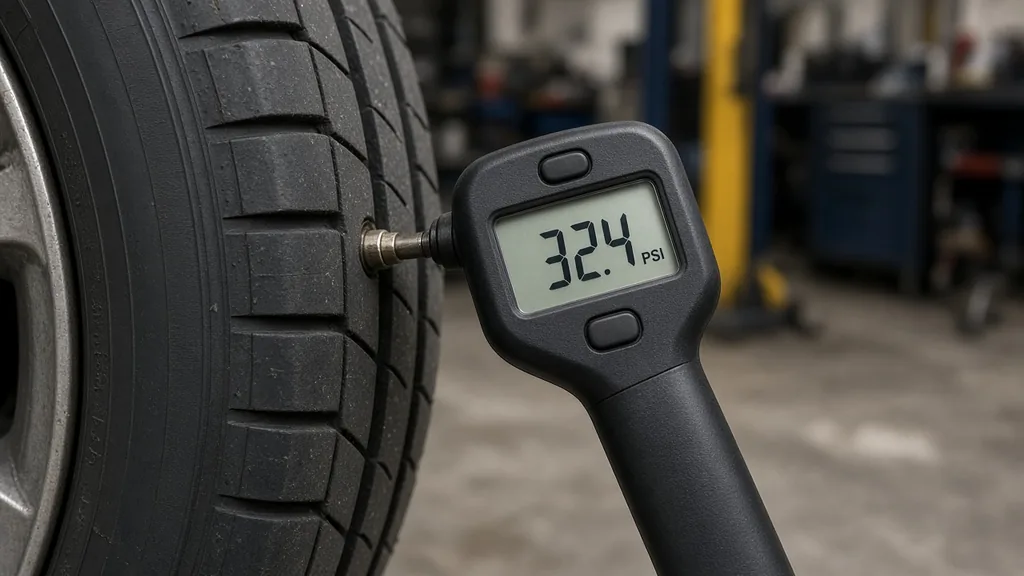
Cold is the spec; hot is a clue
Every US vehicle door placard lists cold inflation pressures. Mechanics who set or judge pressure against a hot bay reading without saying so will either overfill after the car cools or, worse, bleed a hot tire down to the placard and send it out underinflated. USTMA is direct: do not reduce pressure when tires are hot.
Our consumer-facing cold tire pressure guide covers placard versus sidewall max and the ambient 1 to 2 psi per 10°F rule. This page is the shop angle: what to do when the car is already warm.
How much rise to expect
- After a normal local drive: often about 4 to 6 psi above the true cold starting pressure.
- After highway or heavy load: more rise; do not chase the gauge back to placard while hot.
- From bay heat alone: a cold car pulled into a warm shop can pick up 1 to 2 psi per 10°F of ambient change without turning a wheel.
These are working estimates for training, not a universal formula. When the work order requires a documented set-to-placard, schedule or wait for a cold measurement.
Shop SOP that keeps you out of trouble
- Ask how far the car just drove. If it is hot, write “hot reading” next to the gauge numbers.
- Inspect for obvious damage, embedded objects and uneven wear before arguing about a couple of psi.
- Never bleed a hot tire down to the placard. Explain to the customer why the higher number is expected.
- Final inflation to placard happens cold — before the car is driven hard, or on a return visit.
- After a cold fill, road-test or advise that a TPMS lamp may need a short drive to clear. See TPMS.
Related pressure mistakes
- Using the big sidewall number as the target (that is usually a maximum construction pressure, not the vehicle load pressure).
- Matching all four corners to each other while ignoring axle-specific placard values.
- Copying road-tire PSI onto a T-type spare. Confirm the spare marking; see the cold pressure guide.
Frequently asked questions
What is cold tire pressure?
Cold tire pressure is the inflation measured before the tire has been warmed by driving or by sitting in hot sun that raises the reading. Vehicle door placards list recommended cold pressures. USTMA and vehicle makers expect you to set and judge pressure against that cold value.
How much does tire pressure rise when the tire is hot?
As a working shop rule of thumb, pressure often rises about 4 to 6 psi after a normal drive as the air and tire warm up, and more after highway speeds or heavy load. The exact rise depends on speed, load, ambient temperature and starting pressure. Always treat a hot reading as elevated relative to the placard, not as a new target.
Should I bleed air from a hot tire that reads over the placard?
No. USTMA warns never to reduce pressure when tires are hot. A hot tire that reads a few psi above the cold placard is usually normal. Bleeding it down can leave it underinflated once it cools, which builds heat and risks damage.
How should a shop check pressure on a car that just rolled in?
Note that the tires are hot, record the hot readings for the work order if useful, then either ask the customer to return for a cold set or estimate only after explaining the limitation. Final set-to-placard work should be done cold whenever practical. Do not bleed hot tires down to the placard number.
Does TPMS change cold vs hot practice?
TPMS warns about relative underinflation; it does not replace a gauge. After a cold fill to placard, a short drive may be needed before a lamp clears. A lamp that returns quickly on one corner still needs a leak inspection, not another hot bleed. See our TPMS guide.
Why do four tires gain pressure overnight in a hot shop bay?
Ambient heat raises pressure roughly 1 to 2 psi per 10°F. A car that sat outside overnight in the cold then spends an hour in a warm bay will read higher even without road heat. Set to placard when the tire temperature matches the 'cold' condition the vehicle maker intends, usually before significant driving.
Sources
- USTMA, Care and Service of Passenger and Light Truck Tires (PDF): cold inflation as the reference; never reduce pressure when tires are hot; temperature effects on inflation
- Smart Tire Picks, Recommended cold tire pressure: placard vs sidewall max; 1–2 psi per 10°F ambient rule; spare caveats
- Smart Tire Picks, TPMS warning light guide: sensor warnings are prompts to gauge-check, not a complete diagnosis