Recommended cold tire pressure (PSI): placard vs sidewall
Cold inflation pressure is vehicle specific. Start with your door placard and owner’s manual, not the big number molded on the tire sidewall. Spare pressure can differ from road tire PSI, and every 10°F drop in temperature takes about 1 to 2 psi out of your tires.
Last updated: October 15, 2026
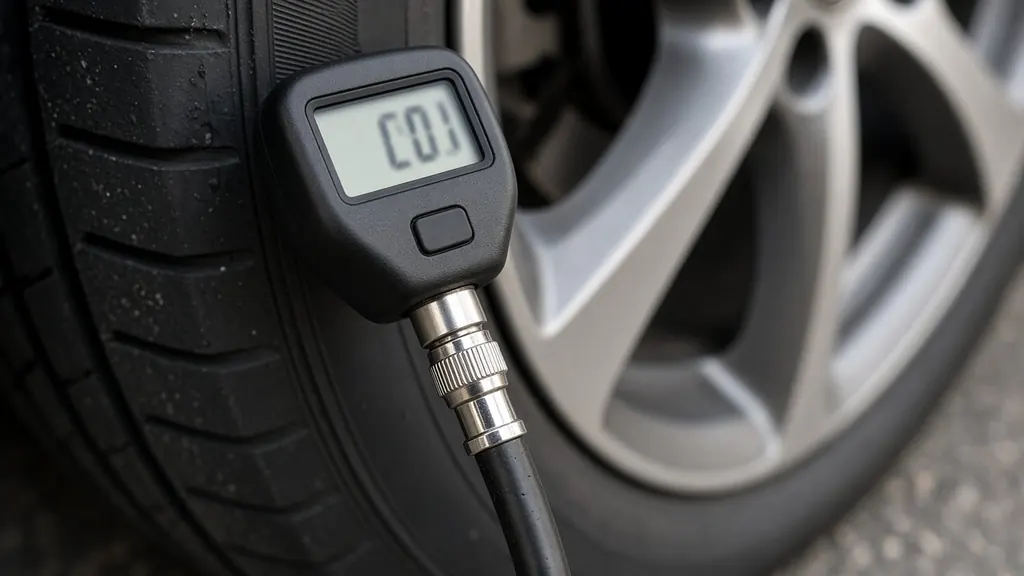
What “cold” tire pressure means
Recommended inflation figures on US vehicles are typically stated as cold pressures, meaning the tire has not been warmed by recent driving or hot ambient conditions that raise pressure. Driving heats air inside the tire, so a reading taken after a long trip can look higher than a true cold reading. This page is educational only. It does not prescribe a universal PSI for every vehicle.
Use the placard (or OEM manual), not a one size rule
Your vehicle’s Tire and Loading Information label (door jamb placard) usually lists recommended cold inflation pressures for the front and rear (and sometimes a spare). Trims and options packages can differ, so also cross check the owner’s manual. We do not publish a single “correct” PSI that applies to all cars, trucks, or SUVs.
Placard recommendation vs sidewall maximum
The large PSI number on a tire sidewall is commonly a maximum cold pressure for that tire’s construction, not the everyday operating pressure your vehicle was designed around. Inflating only to a sidewall maximum without OEM guidance can be inappropriate for ride, wear, and load context. Soft rule of thumb for shoppers: copy the placard first, then confirm with a licensed installer if the vehicle has been modified or if labels conflict.
Practical checking habits (not a safety guarantee)
- Use a quality pressure gauge and compare each tire to the placard values for that axle (including the spare if your setup uses one).
- Check when tires are cold when practical, for example before a day’s first drive, and follow any timing notes in your owner’s manual.
- After adding or releasing air, re check and reseat valve caps. Ask an installer about TPMS service if sensors or valve stems need attention.
- Uneven wear, repeated underinflation warnings, or visible damage are reasons to stop and have a licensed professional inspect the set. This site cannot diagnose your vehicle remotely.
Spare PSI vs road (placard) PSI
Many drivers assume the spare uses the same cold PSI as the front or rear road tires. That is often wrong for compact temporary spares, and it is a common roadside mistake. Soft framing: use OEM labels for your vehicle. This section is general education, not a universal number.
Road tire PSI (placard front and rear)
The door placard cold pressures for front and rear are the everyday targets for the tires mounted for normal driving. Check those with a gauge when cold. TPMS thresholds on many vehicles relate to those road tire expectations. Details vary by make and model. See the TPMS warning light guide for alert patterns.
Temporary spare notes
Compact temporary spares (often called donut or T type spares) frequently need a much higher cold operating pressure than the road tire placard numbers. Look for:
- Pressure molded on the spare sidewall.
- A spare PSI line on the Tire and Loading Information label when one is printed.
- Owner’s manual notes on temporary use limits (speed, distance, and where the spare may be mounted).
A full size matching spare may follow the same cold PSI as a road tire when the manual or placard says so. Soft practice: read the spare type first, then the number. Do not invent a PSI from a blog post.
Quick checklist before you need the spare
- Confirm you have a spare (or an OEM mobility kit) and that it matches what the manual describes.
- Gauge the spare cold pressure on a schedule, not only after a puncture.
- Inflate to the spare’s specified cold pressure from the sidewall, placard spare line, or manual.
- Inspect for obvious damage, dry rot, a missing valve core, or a soft tire that will not hold air.
- Read temporary use limits before driving farther than necessary on a compact spare.
- Expect TPMS behavior to differ until a normal road tire is back on and a licensed shop confirms the system.
Record spare PSI next to road tire PSI on the placard checklist. Soft reminder: a temporary spare is a short term mobility tool, not a long term fifth tire.
Cold weather tire pressure: how much PSI drops
Short answer: expect about 1 to 2 psi less for every 10°F the temperature falls. NHTSA’s tire technology report puts it at about 1 psi per 10°F, and the USTMA Tire Care and Safety Guide gives a range of 1 to 2 psi. Nothing is leaking. The air sealed inside the tire takes up roughly the same space, and colder air pushes on the tire walls with less force, so the gauge reads lower. Warm the air back up and the pressure comes back, which is why a reading after a long drive looks higher than a true cold reading.
That matters most in fall. Tires set to the placard on a warm September afternoon can be several psi low on the first frosty morning, even though nothing is wrong with them. Tires also lose a little air through the rubber over time (USTMA says 1 to 2 psi a month), so a cold snap on top of a skipped monthly check adds up.
Wondering whether a nitrogen fill would stop this? It slows that slow seepage only a little, and nitrogen drops with the cold just like air does. See nitrogen vs air in tires for what the tests found.
How to check and adjust when it turns cold
- Check when cold. USTMA defines cold as parked for at least 3 hours or driven less than one mile at moderate speed. NHTSA also says at least three hours. First thing in the morning, before you drive, is easiest.
- Fill to the placard, not the sidewall. Use the cold pressures on your door placard or owner’s manual for front, rear, and spare.
- Never bleed hot tires. Warm tires normally read above the cold placard number. USTMA warns against letting air out of hot tires, and notes that a hot reading at or below the cold placard value may mean the tire is badly underinflated.
- Do not underinflate for snow. Letting air out does not give safe extra grip on the road and adds heat and uneven wear. For snow and ice, look at winter tires and when to switch.
- Recheck after a big swing. After a 20°F or larger drop, or when you move a car from a warm garage to a cold street, recheck. If you inflate in a heated garage, the tires will read lower once outside.
TPMS lights after a cold snap
A TPMS warning light on the first cold morning is very common, because every tire drops at once and one may slip under the warning threshold. Check all four (and the spare) with a gauge, fill to the placard pressures, and drive a short distance so the system can update. If the light returns quickly, flashes then stays on, or one tire keeps losing air, have a licensed professional look at it.
Cold weather PSI drop calculator
Rough math only. Enter your placard cold PSI, the temperature when the tires were last set to it, and the temperature now. It shows a range using 1 and 2 psi per 10°F. It runs in your browser, stores nothing, and sends nothing.
Estimate only. Real change depends on sun, driving, altitude, and slow leaks. A quality gauge reading on cold tires, compared with your door placard, always beats the math.
Load and “set it and forget it”
Load (passengers, cargo, towing) can matter for how a vehicle manufacturer frames inflation guidance. Some manuals include alternate tables for heavy load. Treat brochure shortcuts and forum “run X PSI” posts cautiously. Verify against OEM materials for your exact vehicle.
Before you buy or remount tires
Record placard pressures alongside size, load index, and speed rating (see our placard checklist). Have a licensed installer mount and balance tires, confirm TPMS function, and advise if an alternate size changes any service considerations. We do not claim lab tests, and we do not label any inflation practice as the “safest” for every driver.
Informational only. Not professional, safety, or legal advice. Always verify placard and OEM specs for your vehicle and use a licensed installer for mounting, balancing, and related service.
FAQ
Is the PSI on my tire sidewall the pressure I should use?
Usually no. The large number molded on the sidewall is typically a maximum cold pressure for that tire’s construction. Your vehicle’s door placard (Tire and Loading Information label) or owner’s manual lists the recommended cold inflation pressures for that vehicle. Confirm with OEM materials and a licensed installer if anything is unclear.
How often should I check cold tire pressure?
Many public safety resources encourage checking inflation regularly, for example monthly and before long trips, when tires are cold (before significant driving heats them). Exact habits can vary by vehicle and climate. Follow your owner’s manual and ask a licensed installer if you are unsure how to measure accurately.
What does a TPMS warning light mean at a high level?
A tire pressure monitoring system (TPMS) light generally indicates that the system detected a tire pressure condition outside its programmed threshold, or that the system itself needs service. It is a prompt to investigate safely, not a complete diagnosis. Check pressures with a quality gauge when cold if it is safe to do so, and have a licensed professional inspect the tires, valves, and sensors when needed. See our dedicated TPMS warning light guide for solid vs flash then solid patterns and related caveats.
Is spare tire PSI the same as my road tire placard PSI?
Not always. Front and rear road tire numbers on the door placard are for the tires you drive on every day. A compact temporary spare often lists a much higher cold operating pressure on its own sidewall, and sometimes on a separate spare line on the placard or in the owner’s manual. A full size matching spare may use the same pressure as a road tire when the manual says so. Soft practice: read the spare marking and OEM notes. Do not copy the road tire PSI by habit for a T type spare.
Where do I find the correct pressure for a temporary spare?
Check three places in order of practicality: the pressure molded on the spare sidewall, any spare PSI line on the Tire and Loading Information label (door placard), and the owner’s manual temporary spare section. Soft reminder: this site does not publish a universal spare PSI. Confirm for your vehicle and ask a licensed installer if labels conflict.
Should I keep the spare inflated even when I am not using it?
Yes, as a soft habit. Spares lose pressure over time just like road tires. A flat spare in the trunk helps nobody on the shoulder. Check it on a schedule with a quality gauge, inflate to the spare’s specified cold pressure, and inspect for obvious damage or dry rot. For TPMS behavior after a roadside change, see spare tires and TPMS caveats.
How much does tire pressure drop per 10°F?
About 1 to 2 psi for every 10°F the air temperature falls. NHTSA’s tire technology report puts it at about 1 psi per 10°F, and the USTMA Tire Care and Safety Guide says 1 to 2 psi. So a tire set to 35 psi on a 70°F afternoon may read roughly 27 to 31 psi on a 30°F morning. Use the PSI drop calculator for a rough range, then check with a gauge.
Why is my tire pressure light on after a cold snap?
Often because the colder air lowered the pressure in every tire at once, pushing one or more below the TPMS warning threshold. Check all four tires and the spare with a gauge while they are cold and fill to the door placard pressure. Many systems need a short drive before the light clears. If it comes back quickly or one tire keeps losing air, have a licensed professional inspect it. See the TPMS warning light guide.
Should I lower tire pressure for snow or let air out of warm tires?
No to both, as a general rule. Underinflation does not add safe snow traction on the road and can cause heat buildup and uneven wear. Warm tires normally read higher than cold ones, so the USTMA warns never to bleed air from hot tires. Set pressure to the placard value when tires are cold. For snow grip, consider winter tires instead.
Sources
Outbound links to public references. We paraphrase; visit the source for full wording and updates.
- NHTSA — Tires (TireWise) — Public guidance on tire inflation, the Tire and Loading Information label/placard, maintenance, and UTQG consumer grades.
- NHTSA, The Pneumatic Tire (DOT HS 810 561, PDF) — check pressures when tires are cold and at least monthly; every 10 degrees F drop in ambient temperature results in about one psi drop in inflation pressure
- USTMA, Tire Care and Safety Guide (PDF) — check inflation when tires are cold (parked at least 3 hours or driven less than one mile); never bleed hot tires; passenger and light truck tires may lose 1 to 2 psi per month and 1 to 2 psi for every 10 degrees F temperature drop
- NHTSA — Safety and savings ride on your tires — Overview of why tire maintenance and labeling matter for everyday drivers.
- USTMA — Tire care & safety — Trade-association hub for passenger/light-truck tire care topics for consumers.
Next steps
Copy pressures with the placard checklist, then confirm size and ratings via choose tire size. Retailer links coming soon. Check retailers and confirm with your installer.