Tire rotation: how often and which pattern
When to rotate, the right pattern for front, rear and all wheel drive, directional and staggered rules, and what to do about TPMS and lug nut torque.
Last updated: October 12, 2026
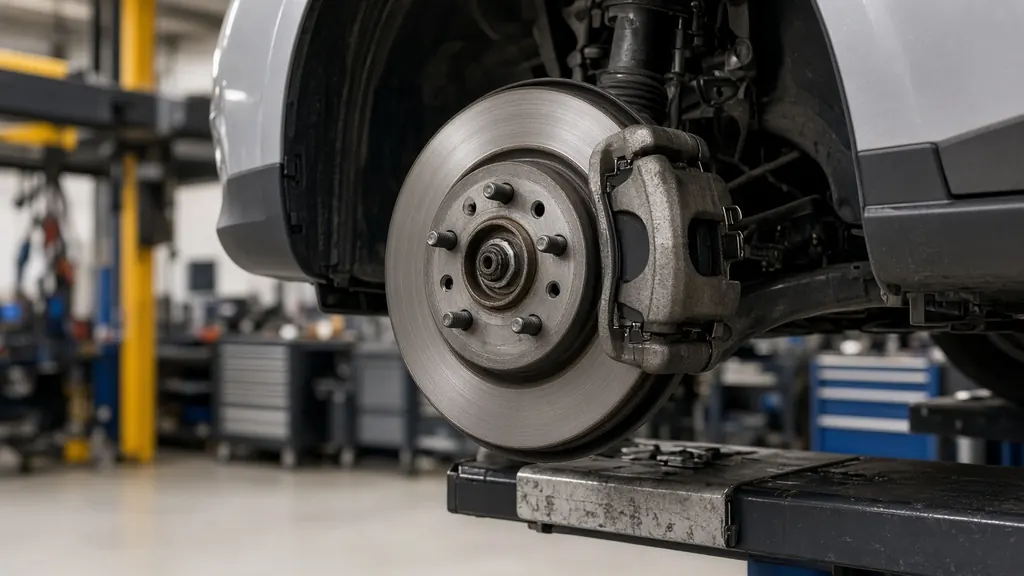
Short answer: rotate your tires as your owner’s manual says. If it gives no interval, the US Tire Manufacturers Association says every 5,000 to 8,000 miles, or at any sign of uneven wear. Michelin’s standard advice is every 5,000 to 7,000 miles, roughly every other oil change. Use forward cross for most front wheel drive cars, rearward cross for rear wheel drive, and rearward cross or an X pattern for many AWD and 4WD vehicles, unless your manual says otherwise.
Why rotate
Each wheel position wears tires differently. Front tires on a front wheel drive car do the steering, most of the braking and the driving, so they wear faster. Moving tires around evens that out, so all four wear at a similar rate, last longer and keep balanced grip. USTMA notes the first rotation is the most important, and that uneven wear should be checked for alignment, balance or other mechanical causes before rotating.
How often to rotate
- Owner’s manual first. Every source below says the vehicle maker’s schedule comes first.
- USTMA: every 5,000 to 8,000 miles if no period is specified, or at any sign of uneven wear.
- Michelin: every 5,000 to 7,000 miles, or every other oil change. Sooner with stop and go driving, heavy loads or rough roads, and AWD and 4WD usually need more frequent rotation.
- Tire Industry Association: every 5,000 to 7,000 miles, depending on the vehicle.
Some tire mileage warranties require rotation at set intervals, so keep receipts.
Rotation patterns by drivetrain
The Tire Industry Association’s rule of thumb is to cross the free rolling axle: on FWD the rear tires cross, on RWD the front tires cross. Diagrams are viewed from above, front of the car at the top.
- Front wheel drive (FWD): forward cross. Fronts go straight back, rears cross to the front.
- Rear wheel drive (RWD): rearward cross. Rears go straight forward, fronts cross to the rear.
- AWD and 4WD: rearward cross or an X pattern (the Tire Industry Association calls it Double X). Keeping tread depths matched matters on these drivetrains, so follow the maker’s interval closely.
- Directional tires: front to back on the same side only.
- Staggered sizes (different front and rear): side to side on the same axle only, and only if the tires are not directional.
When you cannot rotate
If your car has staggered sizes and directional tires, front tires cannot move to the rear and tires cannot switch sides without being dismounted and remounted on the wheel. In practice those tires are not rotated, so check pressure and wear often and expect fronts and rears to be replaced on different schedules. USTMA also notes some asymmetrical and directional tires cannot use the standard patterns. Check your owner’s manual. Never include a temporary (T type) spare in a rotation. A matching full size spare can be added, per USTMA.
TPMS after a rotation
Some vehicles need a TPMS reset or sensor relearn after a rotation, so the system knows which sensor is at which corner or relearns its baseline. See how to reset the TPMS light and your owner’s manual.
Lug nut torque
Lug nuts must be tightened to the torque in your owner’s manual, with a torque wrench, in a star pattern. Do not guess, and do not rely on an impact wrench alone. Many makers advise rechecking torque after the first short drive.
How to rotate, step by step
- Check the manual. Find your vehicle maker’s rotation interval and pattern, and the lug nut torque spec, in the owner’s manual.
- Identify your tires. Note whether the tires are directional (arrow on the sidewall) and whether front and rear sizes differ.
- Pick the pattern. Forward cross for most FWD, rearward cross for RWD, rearward cross or X for many AWD and 4WD, front to back for directional, side to side for staggered sizes.
- Move the wheels. Lift the vehicle safely on proper stands, or have a shop do it, and move each wheel to its new position.
- Torque the lug nuts. Tighten in a star pattern to the torque in your owner’s manual with a torque wrench, and recheck after a short drive if the manual says so.
- Set pressures and TPMS. Set each tire to the door placard cold PSI for its new position, then do any TPMS reset or relearn your manual calls for.
After rotating, set each tire to the door placard cold PSI for its new position, since front and rear values can differ. While the wheels are off, check tread depth and the DOT date code.
Informational only, not professional or safety advice. Lifting a vehicle is dangerous, so use proper jack stands on level ground or have a licensed shop do the rotation.
FAQ
How often should I rotate my tires?
Follow your owner’s manual first. If it gives no interval, USTMA says every 5,000 to 8,000 miles or at any sign of uneven wear, and Michelin’s standard recommendation is every 5,000 to 7,000 miles, roughly every other oil change. Rotate sooner if you see uneven wear.
What rotation pattern is right for front wheel drive?
Forward cross is the common FWD pattern: front tires go straight back, rear tires cross to the opposite front positions. An X pattern is an alternative some makers allow.
What about rear wheel drive, AWD and 4WD?
RWD typically uses rearward cross: rear tires go straight forward, front tires cross to the rear. AWD and 4WD commonly use rearward cross or an X (Double X) pattern. Your vehicle maker’s pattern comes first.
Can directional tires be rotated?
Yes, but only front to back on the same side, so they keep rolling in the arrow’s direction. Swapping sides would require dismounting and remounting the tire on the wheel.
Do I need to reset TPMS after a rotation?
Some vehicles need a TPMS reset or sensor relearn after rotation, especially indirect systems or direct systems that show pressure by position. Check your owner’s manual. See our TPMS reset section.
Should the spare be included?
A matching full size spare can be included, per USTMA. Never include a temporary (T type) spare in a rotation.
Sources
Outbound links to public references. We paraphrase; visit the source for full wording and updates.
- USTMA, Care and Service of Passenger and Light Truck Tires — if no rotation period is specified, rotate every 5,000 to 8,000 miles or at any sign of uneven wear; directional, asymmetrical and different front and rear sizes have restrictions; never include a temporary spare
- Michelin USA, Tire rotation guide — standard recommendation every 5,000 to 7,000 miles or every other oil change, vehicle maker’s guidance first; FWD front straight back, RWD rear straight forward, AWD and 4WD crisscross
- Tire Industry Association, Tire rotation — rotate every 5,000 to 7,000 miles; cross the free rolling axle; Double X for AWD and 4WD
- Bridgestone, How often to rotate tires — forward cross and rearward cross patterns as recommended by The Tire and Rim Association