Tire repair or replace: a shop decision guide for mechanics
When shops should repair a puncture vs replace: tread-area limits, sidewall no-repair zones, run-flats, age and prior plugs.
Last updated: November 5, 2026
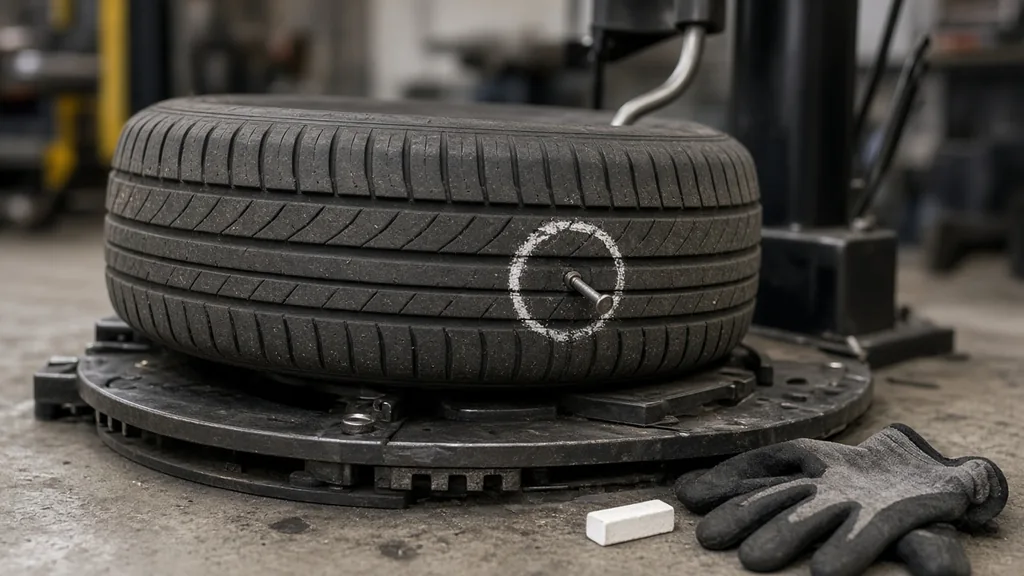
Repair is a narrow window
Customers hear “it’s just a nail.” Shops answer to the injury location, size and the tire’s history. USTMA-style guidance used across the industry limits permanent repair to small punctures in the central tread area, done from the inside with a proper patch-plug unit after demounting. Everything else is a replace conversation.
For the consumer-facing version of plug versus patch chemistry, see tire plug vs patch. This page is the bay decision tree.
Replace immediately when
- Injury is in the sidewall or shoulder (outside the repairable tread belt area).
- Tread puncture is larger than about 1/4 inch (6 mm), or there are multiple injuries too close together.
- Cord, belt or inner liner is exposed, kinked or separated.
- The tire ran flat or very low long enough to heat-damage the structure (common on run-flats).
- An old outside string plug is the only prior “repair,” and a full inner inspection fails the limits above.
- Tread is already at replacement depth, or the carcass shows dry rot / bead damage.
Repair only when all of these are true
- Injury sits in the central tread area.
- Diameter is within the industry 1/4 inch style limit after probing.
- Tire is demounted; inner liner is inspected and prepared.
- A combined patch-plug (or equivalent maker-approved unit) is installed per procedure.
- Maker policy allows repair for that construction (especially run-flats).
If any box fails, quote replacement. Pair the quote with when to replace and DOT date codes so age and tread are on the same ticket.
Talking to the customer without the argument
Show the chalk mark on the shoulder or sidewall. Show the inner liner if you demounted. Explain that a cheap outside plug skips the inspection that finds belt damage. Offer to transfer a road-hazard policy if one exists. Keep the refused repair on the invoice so the next shop is not guessing.
Frequently asked questions
When is a puncture repairable?
Industry guidance (USTMA / TIA style limits taught in shops) allows proper repair only for injuries in the central tread area roughly between the shoulder belts, typically no larger than 1/4 inch (6 mm), repaired from the inside with a vulcanized patch-plug stem unit after the tire is demounted. Outside those limits, replace.
Why is a sidewall puncture a replace?
Sidewalls and shoulders flex continuously and lack the same belt support as the tread center. A plug or patch there is not considered a lasting structural repair. Mark it, photograph it, and quote a replacement.
Is an external string plug alone enough?
No. A string plug from the outside is a roadside temporary measure at best. The accepted permanent repair is an inside patch-plug combination with the tire off the wheel. See our plug vs patch guide for the consumer explanation of the same rule.
Should run-flat tires be repaired?
Follow the tire maker. Many run-flat makers restrict or prohibit repair after the tire has carried load while flat, because the sidewall may already be damaged. If maker policy is unclear, replace. Our run-flat guide summarises common maker limits.
Does tire age force a replace even if the hole is small?
Age alone is not the puncture rule, but many shops refuse repair on tires with six or more years of service, visible cracking, prior improper repairs, or tread at or below legal/safety limits. Document DOT week/year and tread depth on the work order. See when-to-replace and DOT date guides.
What should the work order show when you refuse a repair?
Injury location (tread / shoulder / sidewall), measured size, whether the tire was demounted for inspection, prior repairs found, maker repair policy if relevant, and a clear replace recommendation. Photos protect the shop and the customer.
Sources
- USTMA, Care and Service of Passenger and Light Truck Tires (PDF): puncture repair limits; professional inspection with tire demounted; replacement when repair criteria are not met
- Smart Tire Picks, Tire plug vs patch: plug-patch combo, 1/4 inch tread-area rule, why plug-only is not a proper repair
- Smart Tire Picks, Run flat tires explained: maker-specific repair restrictions after deflated running
- Smart Tire Picks, When to replace tires: tread depth, age and damage replacement cues