Should tire shops replace TPMS sensors when fitting new tires?
A functioning sensor does not have to be replaced just because the tire is coming off. Age, corrosion, the service kit, and a real test should decide, and the dollar figures below are manufacturer estimates.
Last updated: November 5, 2026
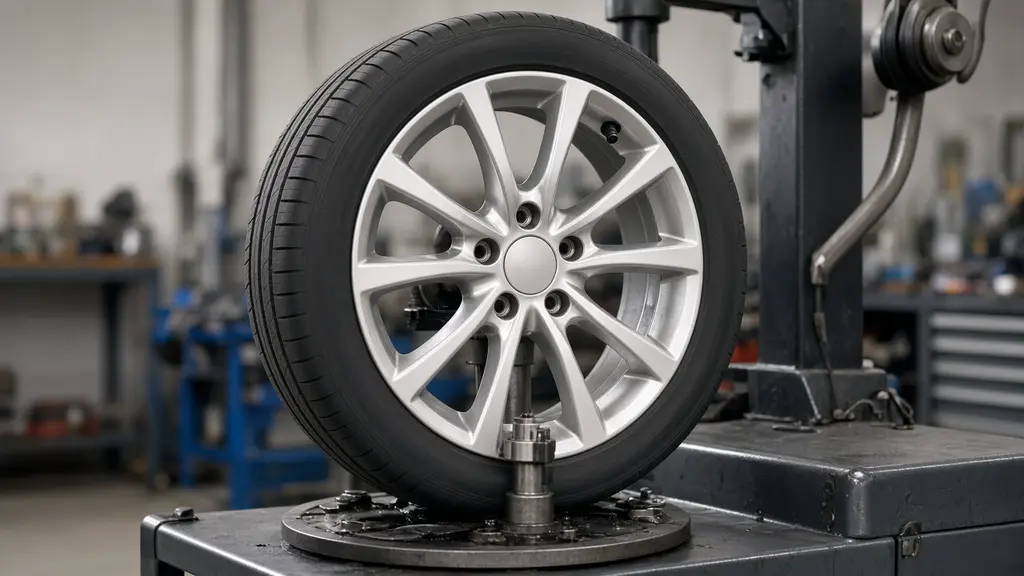
Short answer
No. Do not replace all four sensors just because the tires are new. Keep a sensor that communicates, shows no fault, and is physically sound. Refresh the valve hardware that seals the wheel.
This page is about direct systems, with a sensor in each wheel. Indirect systems infer low pressure from wheel speed and have no sensor body to replace. See the TPMS warning light guide, and follow the owner’s manual for the car in the bay.
How long the battery lasts
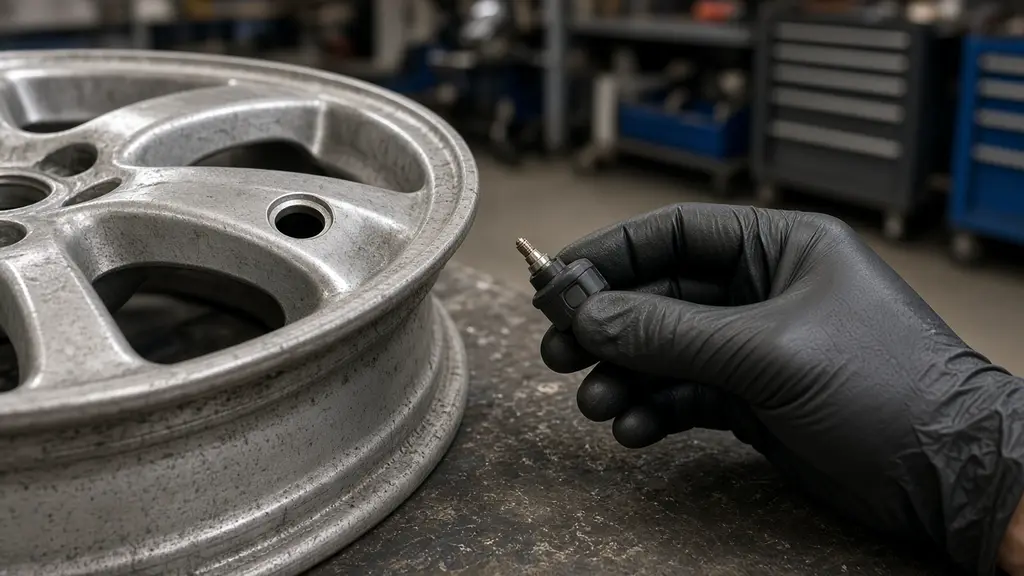
Most direct sensors use a sealed battery for the pressure reading and the radio link. Schrader describes the body as a closed housing, laser welded or epoxy potted. When the battery fails, replace the sensor body, not a cell.
Plan on about 5 to 10 years, and do not promise a set age. One narrower figure is a manufacturer estimate of design life. GM bulletin 07-03-16-004E (February 2023), hosted by NHTSA, says the sensor it covers is designed to last 10 years or 150,000 miles (240,000 kilometers). That applies only to the GM vehicles the bulletin lists. It is not a reason to scrap a sensor that still tests good.
Service kit versus a new sensor
Replacing the whole sensor at every tire change is usually unnecessary. If it wakes, the system has no sensor fault, and the housing is intact, keep the electronics.
Replace the seal. Schrader says to install the valve service kit whenever the tire comes off the wheel, and the service-kit overview says those parts are for one-time use. Snap-in rubber valves and clamp-in aluminum valves do not share parts. If a clamp-in stem is fixed to the sensor and that stem is damaged, replace the sensor. A crushed grommet will not reseal the rim hole, and the wrong core on an aluminum stem invites a slow leak. Torque comes from that kit’s specification.
Age and mileage rule of thumb
Rule of thumb. The table is a screening aid for the tire-install conversation. It is not a manufacturer service interval, and it is not an order to replace a sensor that still tests good.
| Sensor age | Suggested shop approach |
|---|---|
| Under 5 years | Test and inspect. Keep it if serviceable. |
| 5 to 7 years | Check condition and discuss remaining life. |
| 7 to 10 years | Offer preventive replacement while the tires are off. |
| Over 10 years | Strongly consider replacement, especially if original. |
Mileage does not replace the test. The GM 150,000 mile figure is one specification. A high-mileage car with newer sensors can outlast a low-mileage car on its original set, so sensor age matters more than vehicle age after a prior replacement. Wake each sensor when the tool allows. A failed response, a stored fault, or a damaged housing beats an odometer guess. Not every tool reports a trustworthy battery percentage.
Cost versus a comeback
Changing an aging sensor during a tire job avoids a second dismount, mount, and balance if it dies soon after. Schrader publishes a manufacturer estimate of about $50 to $100 per sensor and about $5 to $10 per wheel for a service kit. Those are manufacturer estimates, not current shop prices. Quote your own parts and labor. Four sensors are a large add-on when the old ones work. Four kits are the smaller line tied to every dismount. Offer a sensor when age, damage, or the test supports it. That is a choice, not a requirement, unless that vehicle says otherwise.
Relearn after the tires are mounted
A sensor that fits is not automatically known to the car. Some must be programmed, and many vehicles need a relearn of IDs or wheel positions. Otherwise the light can return at the correct pressure.
Continental’s tool FAQ covers tools that wake sensors, program them, and upload IDs after a new wheel or a position change. Common patterns are an automatic relearn on a specified drive, a stationary relearn in a set order, and an OBD relearn that writes IDs. VDO sheet VR19NISINF does trigger, upload, and a drive, but only for the vehicles it covers. Follow the tool for the car on the lift. GM says its sensors must be relearned with accessory wheels, and a rotation can light the warning on cars with different front and rear placard pressures if positions were not learned. Set placard pressure before the car leaves. A hot fill can bring the light back for another reason. See cold versus hot tire pressure and tire rotation.
A workflow that cuts comebacks
- Scan before the bead breaks. Record the response, any ID, any fault, and the complaint.
- Keep the sensor clear of the machine. Inspect the stem, nut, grommet, and housing.
- Fit the matching service kit and torque it to the sensor specification.
- If you replace a sensor, program it when required and finish that car’s relearn.
- Leak-check, set placard pressure, and write the final TPMS status on the repair order.
Those notes separate a problem the car arrived with from one created on the machine.
Verdict
Do not replace every sensor because the tires are new. Test, inspect the valve hardware, replace the service kit the design calls for, and offer a full sensor when age, damage, or the reading justifies it. On older original sensors, preventive replacement is a fair option while the tires are off. On newer sensors that test fine, the kit and a completed check are often enough.
Frequently asked questions
Do all four TPMS sensors need replacement when buying new tires?
No. Keep a sensor that communicates, has no fault, and is not damaged. If all four original sensors are near the end of expected battery life, replacing the set while the tires are off can avoid a later visit. That offer follows the test and the rule of thumb, not an automatic rule.
Can a shop replace just the TPMS battery?
Generally not. On a typical sealed direct sensor the battery is inside a closed body. When it fails, the sensor body is replaced. The service kit renews the seals, not the battery.
Should TPMS service kits be replaced with every tire change?
Yes, when the sensor has replaceable seals. Schrader says to replace those parts every time the tire comes off the wheel, and the kit overview says they are for one-time use. Snap-in and clamp-in sensors need different kits, torqued to that kit's specification.
Does installing new tires require a TPMS relearn?
Not always. The same working sensors left in their original positions may need no relearn. A new sensor, a position change, or a car that uses a learn mode or an OBD ID upload needs the procedure for that vehicle.
Can a TPMS warning light indicate something other than a dead sensor?
Yes. Low pressure, a slow leak, a missed relearn, a programming mismatch, and other faults can all light the warning. On many vehicles a flash-then-steady light means a system fault, and a steady light means low pressure. Check placard pressure with a gauge before condemning a sensor.
Sources
- Schrader, Serviceable vs. replaceable TPMS components: sealed sensor body; replace the service kit when the tire is removed
- Schrader, Service kit overview (PDF): one-time-use sealing parts at every dismount
- Schrader, TPMS replacement: manufacturer estimate, about $50 to $100 per sensor and $5 to $10 per service kit
- GM bulletin 07-03-16-004E (February 2023) via NHTSA (PDF): manufacturer estimate, 10 years or 150,000 miles, for the vehicles it covers
- Continental, TPMS service equipment FAQ: tools that activate, program, and relearn sensors
- Continental VDO, relearn sheet VR19NISINF (PDF): one application’s trigger, ID upload, and drive
The age table is a rule of thumb, not an official service interval. The dollar ranges and the GM design-life figure are manufacturer estimates.